Virtual work can promote employee health, but it also presents new challenges for employees and occupational health services.
Current occupational health and safety solutions are often note catered to these employees, who are often invisible to occupational physicians. There is also a lack of evidence-based digital tools.
BAKI is addressing these gaps in the research by asking how occupational health services can be supported digitally in the setting of virtual teams. Two new tools are being developed for this purpose:
BAKI-AI

A digital learning assistance system. The system collects multimodal physical, psychological, social, organisational and technical data from virtual employees, analyses and learns from this data to identify and predict predictors of health-related outcomes.
The system will also create individual resource and risk profiles. These profiles are intended to provide employees with feedback on their own working environment, health opportunities and risk factors and thereby helping them to better prepare for consultations with company doctors.
BAKI-Social

A digital interaction platform. For this, telemedicine options such as social virtual reality (VR) and chatbots will be explored in order to improve the visibility of digital employees and strengthen access for company doctors and occupational health management (OHM) measures in the setting of virtual teams by means of digital social spaces.
Methodology
The development of the assistance system is based on a multi-method approach that integrates methods from occupational medicine, psychology, data science, and human–computer interaction.
The system is intended to support occupational health practice for virtual workers by:
identifying specific strains, stressors, and resources of virtual employees,
deriving resource and risk profiles to provide individualized preventive and health-promoting support,
assigning workplace health management (BGM) measures to individual profiles and identifying BGM needs,
increasing the visibility of occupational health expertise—particularly regarding BGM measures—and improving access to occupational physicians, and
evaluating the potentials and challenges of using artificial intelligence (AI) in occupational medicine.
Through the establishment of this junior research group, interdisciplinary competence profiles with diverse development opportunities in forward-looking research fields are created.
The project is funded through the FoGa – Research for Health in the Working World program.
Are You Interested?
The BAKI project is currently seeking cooperation partners for data collection. We are looking for companies willing to support the project by participating in data collection. In return, we offer integration into the project as well as future access to the tools developed within it.
If you are interested, please refer to the linked documents, where all requirements and advantages of participating in the project are described in detail.
Call for Abstracts
Following a successful premiere in 2024, the KI-Werkstatt (AI Workshop) will take place for the second time on March 17, 2026. Together with TU Dortmund, the Lamarr Institute, and the Research Center for Trustworthy Data Science and Security, we once again invite you to an interdisciplinary exchange on artificial intelligence in the working world — this time with the theme: Research Meets Practice.
Contact
Project managment
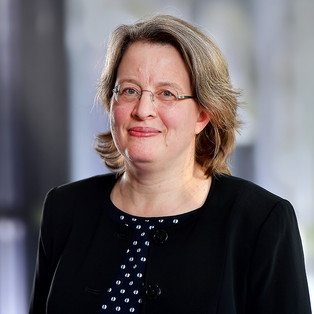
contact information
- e-mail address: susanne.voelter-mahlknecht(at)med.uni-goettingen.de
- Fachärztin für Arbeitsmedizin
- Fachärztin für Haut- und Geschlechtskrankheiten
- Mitglied des Ausschusses für Arbeitsmedizin (AfAMed) des Bundesministeriums für Arbeit und Soziales (BMAS)
- Weiterbildungsermächtigung für den Facharzt "Arbeitsmedizin" (Ärztekammer Berlin)
- Mitglied der Sachverständigenkommissionen beim Institut für Medizinische und Pharmazeutische Prüfungsfragen (IMPP)
- Vorstandsmitglied der Fachgesellschaft DGAUM (Deutschen Gesellschaft für Arbeits- und Umweltmedizin)
- Mitglied des AG "Zukunft der Arbeit nach Corona" der Leopoldina - Working Group "future of work"
- Mitglied des Ehrenrats der DGAUM