
Diversity-sensitive occupational health management: BGM vital
Department of Occupational, Social and Preventive Medicine
In the wake of demographic change and a shift in the world of work towards new forms of work and organisation, it is becoming increasingly important for companies to address the issue of maintaining the employability of all their staff.
This requires health-oriented organisational and working structures. This applies to large companies, but also affects small and medium-sized enterprises (SMEs). More than half of all employees subject to social insurance contributions in Germany work in SMEs.
The establishment of a company health management system (CHMS) can create the necessary framework for health-promoting structures. However, too date, there is a lack of concrete support measures specifically for SMEs, as previous CHM initiatives in this area have mostly been very general and do not address the specific needs of SMEs. Furthermore, the existing guidelines in the area of CHM are not very target-oriented or diversity-sensitive. The latter, in particular, is becoming increasingly important in an increasingly diverse society.
What is the BGM vitality project about?
In order to better meet the needs and requirements of companies and employees, it is necessary to develop diversity-sensitive strategies in the field of occupational health management that take into account various dimensions such as age, gender, nationality/ethnic origin and disabilities. The aim of the BGM vital research project is therefore to create an online, SME-specific, diversity-sensitive guide and to set up a web-based occupational health management service centre.
In the project, scientists are working closely with the scientific advisory board, which consists of various occupational health management stakeholders, and above all with representatives of SMEs, to analyse target-specific occupational health management needs and develop appropriate measures through surveys, expert interviews and joint focus group events.
Existing guidelines for SMEs are being modified and supplemented with aspects that take into account the diversity of life situations and working environments. The data collected is used to develop personalised measures and recommendations. These can be tested free of charge by SMEs as part of an evaluation, allowing valuable feedback to be incorporated directly into further development in an iterative process.
- A potential finder to assess the company-specific need for occupational health management measures.
- Informative videos and background information on occupational health management and its components.
- A questionnaire to identify work-related health types.
- An interactive game that introduces risk assessment as part of occupational safety.
- A checklist to assist with the implementation of occupational health management in your own company, and
- A list of contact persons for various occupational health management tasks and issues.
Indirectly, the project contributes to reduced absenteeism, maintaining the ability to work and thus also securing the earning capacity of employees, increasing economic competitiveness and higher employee satisfaction.
Project partners
Tübingen University Hospital, Institute for Clinical Epidemiology and Applied Biometry University of Tübingen, Institute for Sports Science Media University Research Beacon Responsive Media Experience (REMEX) University of Tübingen, Centre for Media Competence
Publications
Friedrich, J., Alam, N., Bilgic, L., Feng, Y-S., Lehrke, L., Marschall, S., Martus, P., Münch, A-K., Münster, P., Niebuhr, F., Rupp, M., Strauß, J., Schneider, K., Sudeck, G., Thiel, A., Zimmermann, G. & Voelter-Mahlknecht, S. Betriebliches Gesundheitsmanagement (BGM) vital: Entwicklung und Evaluation einer adressatenorientierten und diversitätssensiblen BGM-Servicestelle Prävention und Gesundheitsförderung 2023;
Friedrich, J.; Münch, A-K.; Thiel, A.; Völter-Mahlknecht, S.; Sudeck, G. OHLS: Ein Fragebogen zur Messung arbeitsbezogener Gesundheitskompetenz Public Health Forum 2022; 30(2):83-85.
Friedrich, J.; Münch, A-K.; Thiel, A.; Völter-Mahlknecht, S.; Sudeck, G. Occupational Health Literacy Scale (OHLS): development and validation of a domain-specific measuring instrument Health Promot Int 2023; 38(1)
Contact
Project management
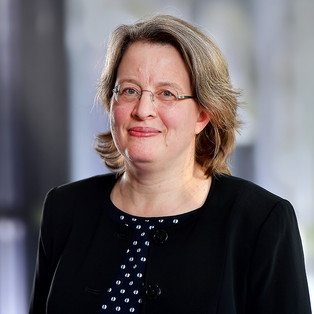
- Fachärztin für Arbeitsmedizin
- Fachärztin für Haut- und Geschlechtskrankheiten
- Mitglied des Ausschusses für Arbeitsmedizin (AfAMed) des Bundesministeriums für Arbeit und Soziales (BMAS)
- Weiterbildungsermächtigung für den Facharzt "Arbeitsmedizin" (Ärztekammer Berlin)
- Mitglied der Sachverständigenkommissionen beim Institut für Medizinische und Pharmazeutische Prüfungsfragen (IMPP)
- Vorstandsmitglied der Fachgesellschaft DGAUM (Deutschen Gesellschaft für Arbeits- und Umweltmedizin)
- Mitglied des AG "Zukunft der Arbeit nach Corona" der Leopoldina - Working Group "future of work"
- Mitglied des Ehrenrats der DGAUM